AI Interviews vs Human Interviews: Which Is Better for Hiring in 2026?

AI Interviews vs Manual Interviews: Which Is Better for Hiring?
AI Interviews vs Manual Screening: Which Is Better for First-Round Hiring?
How can recruiters reduce hiring time without compromising candidate quality? AI interviews vs manual interviews help evaluate candidates effortlessly. They automate screening and analyze prospect responses.
In manual screening, recruiters review resumes and conduct interviews. Combining both approaches helps improve speed and hiring quality.
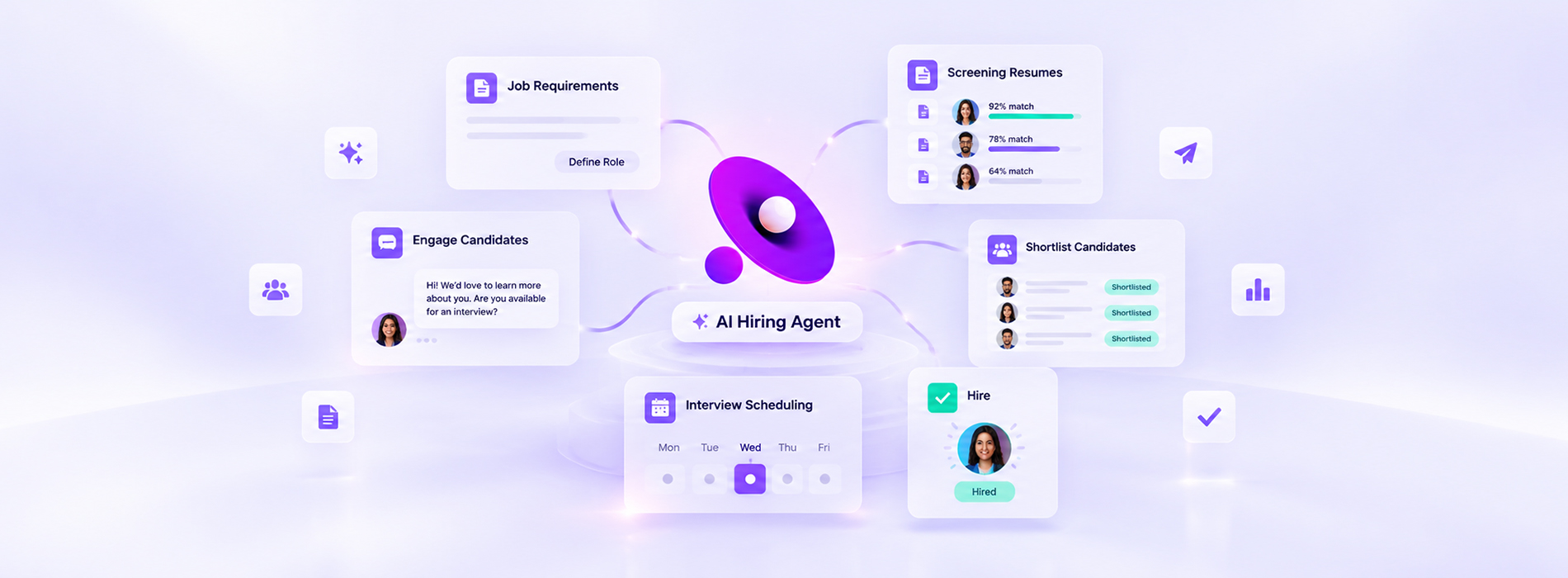
What Is First Round Candidate Screening?
First-round candidate screening is the first stage of the hiring process, where recruiters select prospects based on job requirements.
It includes:
- Reviewing the resumes of the applicants
It helps to verify candidate qualifications, work experience, education, and skills required for the job role.
- Selecting candidates based on the job description
Helps identify which candidate would be the perfect fit for the specific job requirements.
- Conducting the interviews
To assess role-specific knowledge and communication skills, and to consider how suitable the candidate is for that specific job position.
- Shortlisting the suitable candidates
Before scheduling technical and final interview rounds, they shortlist the suitable candidates based on hiring criteria.
- Eliminate the unqualified prospects
This reduces recruiter workload and helps them focus on candidates with the highest hiring potential.
Moreover, automated interview software plays an important role in streamlining these repetitive activities. The automation of the hiring process enables hiring managers to focus on interviewing the right candidates.
Example: A company receives 100 applicants for 50 job roles. Recruiters screen resumes, select qualified candidates, and move on to the next step of the interview.
Why Does Manual Screening Become Inconsistent at Scale?
Manual screening completely depends on individual recruiters. Manually evaluating the candidates can be time-consuming.
However, there are some challenges that recruiters face in this process:
- Reviewing thousands of resumes manually, which is time-consuming
- Different recruiters have their own interview styles.
- Might face communication delays from the candidates
- Hiring could be extended longer if done manually.
Manual interviews might take enough time to resume screening and evaluate the candidates. However, one recruiter can focus on communication skills, and others may prioritize other hiring tasks.
Example: A healthcare company receives 1000 resumes for 300 jobs. Different recruiters will shortlist the candidates based on different priorities, which leads to slow hiring.
How Do AI Interviews Improve Structure and Speed?
AI interviews create the same screening process for every applicant. Unlike manual interviews, where interviewers may use different questions for each candidate, the AI interview asks role-based structured questions to all candidates.
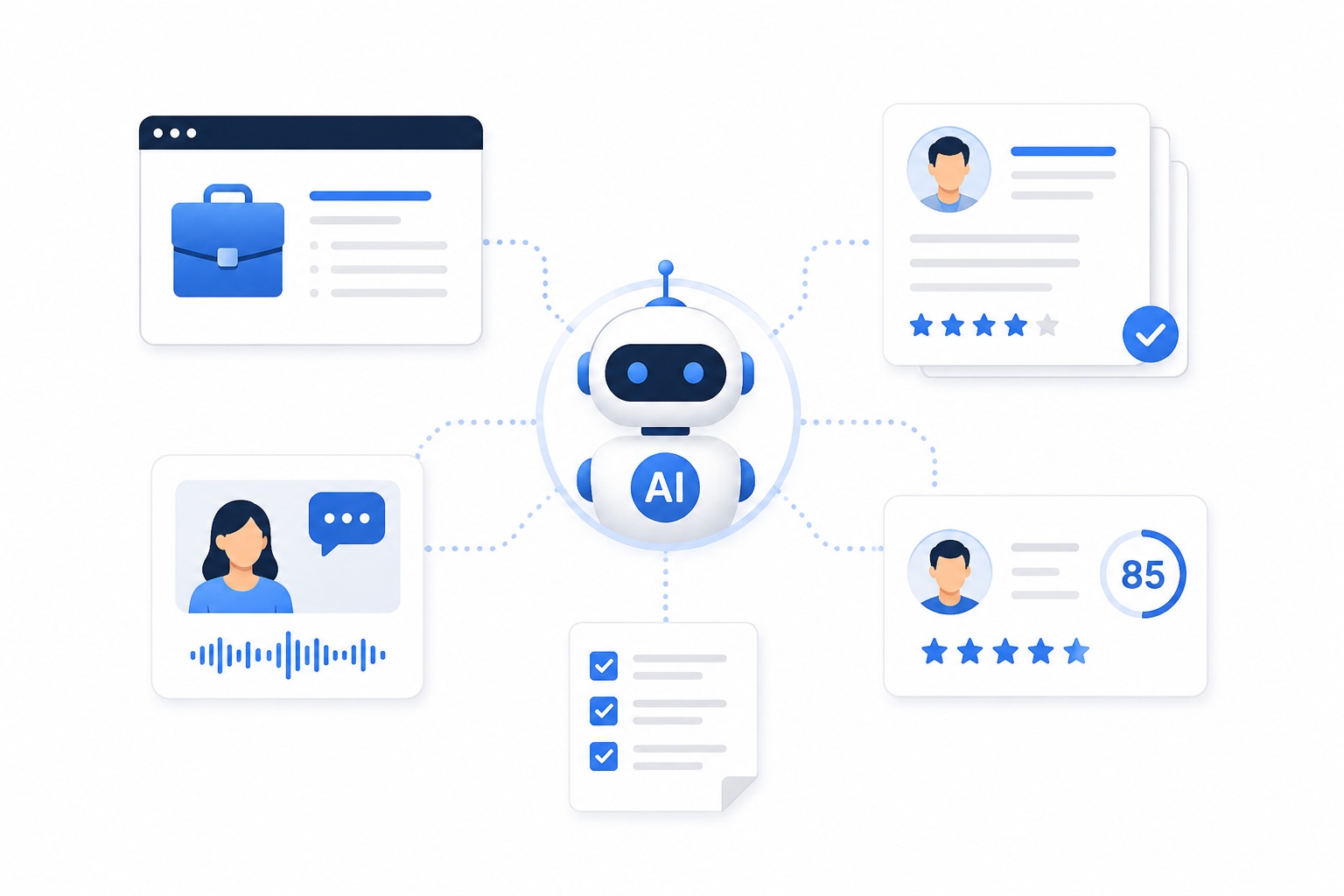
AI screening vs. recruiter screening highlights the multiple benefits during the first hiring round.
- Screen candidates automatically
- Helps ask questions based on the job role
- It helps record the video and audio responses.
- Evaluate qualified prospects.
- Shortlist the qualified applicants faster without any hassle.
Example: A company receives 500 applications. AI interviews ask the same questions, evaluate responses, and shortlist the best candidates within hours with no delays.
AI Interviews vs Manual Screening Comparison
| Features | AI Interviews | Manual Screening |
|---|---|---|
| Speed of screening applicants | Since it is automated is very fast | It is time consuming |
| Evaluation of the candidates resume | It is automated | Require individual efforts |
| Interview questions | It is structured and same for all the candidates | Different questions for different candidates |
| Workload on the recruiter | Less workload | More workload |
| Consistency of the candidates | The process is same for everyone | It completely depends on recruiters |
| Final hiring decision | Support the recruiters in the complete process | Recruiter leads everything |
The comparison shows that AI interviews vs manual interviews are not about choosing one over the other. Instead, each approach solves different hiring challenges that come across.
Where Do Human Recruiters Still Matter?
AI helps improve efficiency; however, human recruiters still play a significant role in the hiring process.
Human recruiters can easily understand the company’s culture and the team's dynamics. These things cannot be done through automation.
- Leadership potential can be found.
- Understand which one would be the right fit.
- Negotiating the salary with the candidates
- Motivating the candidates easily
- Final hiring decisions require human recruiters.
AI agent doesn’t get rid of the recruiters; rather, it deals with the regular tasks very effectively.
Example: A company shortlists 50 candidates using AI interviews. Then, for the final interview round, selecting the right candidate requires manual input.
How Do AI Interviews Reduce Fraud Risk and Verify Candidate Authenticity?
AI interviews help identify whether the candidate’s identity is genuine before they move on to the next steps.
AI secures the candidate information in the interview process to see whether the candidate is the right fit for the position.
AI interviews reduce fraud risk by:
- Secure interview links
This link is only allowed to be used by the authorized candidate who has full access to the interview platform.
- Analyze the behavior of the candidates
AI helps to identify unusual responses and inconsistent answers during the interview process.
- Consistency in the questions of interviews
This helps reduce the possibility of unfair advantages in the hiring process.
- Human review of AI-generated reports
It is one of the most vital steps for human review of the responses before heading to the final interview stage.
Benefits of AI Interviews for Businesses
Reduce the screening time up to 80-85%
AI automatically screens resumes, records responses, and helps create an evaluation report for recruiters.
Enhance the productivity of the recruiter up to 75%
Reduce the recruiter's time spent on regular tasks, allowing more focus on evaluating shortlisted candidates.
Accelerating hiring up to 50-70%
With automated hiring, recruiters' workload is reduced, helping them complete the first hiring stage much faster.
Improve hiring quality
Generating the complete report on candidates helps recruiters identify candidates who best match the job requirements.
Business Outcome: Companies reduce hiring costs, improve recruitment efficiency, hire qualified applicants, and deliver a better candidate experience.
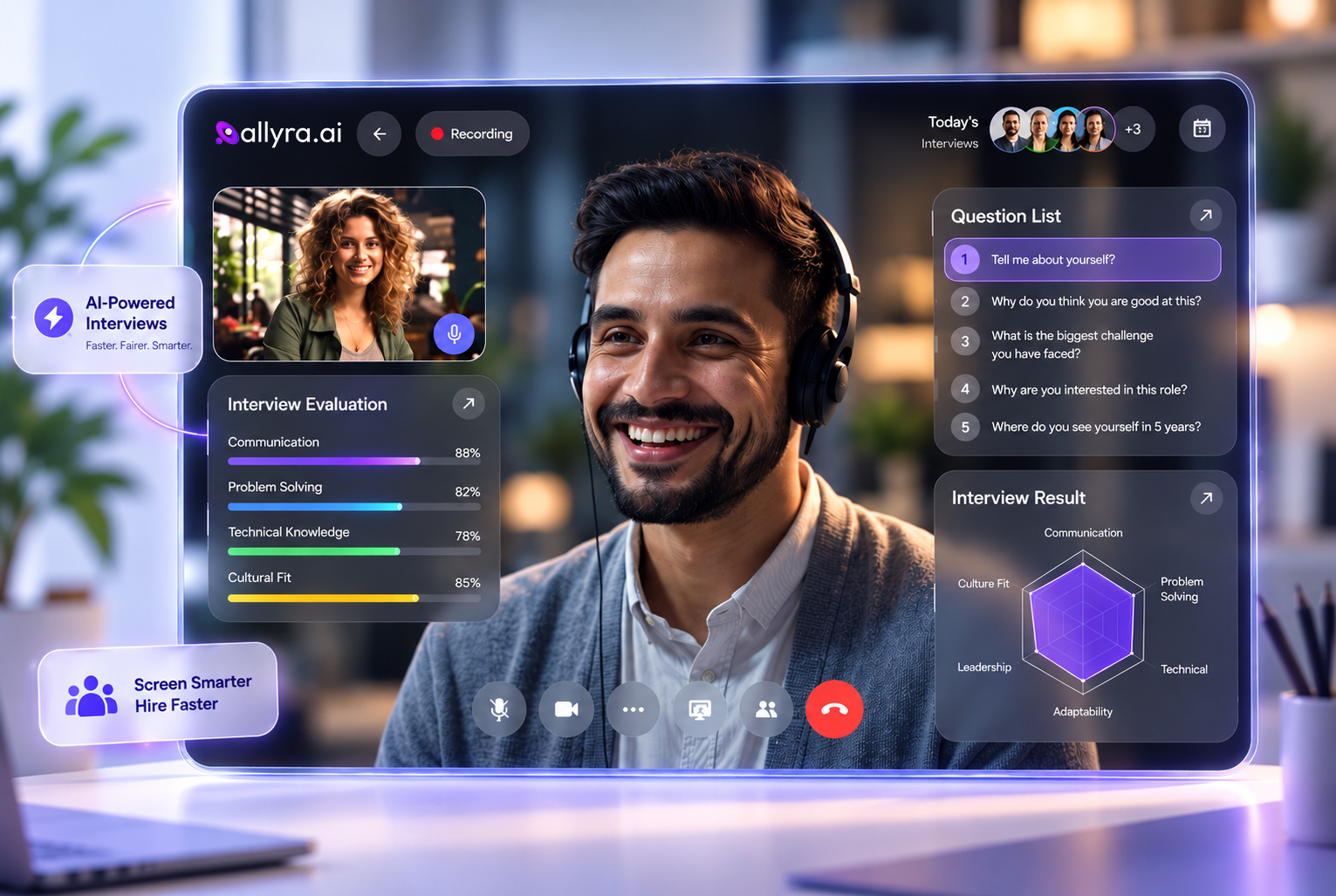
How Does Competency-Based Candidate Scoring Work?
What do you understand by competency-based candidate scoring? It helps evaluate applicants based on the skills required for the job role.
AI reviews the complete interview performance, then compares it with job requirements and finally creates the scorecard for the recruiters.
- 80-90% structured evaluation
AI creates the same structured interview questions for multiple candidates.
- 100% interview analysis
AI does detailed interview analysis by evaluating candidate responses.
- Match skills based on specific roles
Highlight the skills of the particular candidate that are suitable for that specific position.
- Analyze the audio and video responses
It helps recruiters make hiring decisions by analyzing all candidates' responses and their overall candidate fit score.
It helps recruiters compare applicants based on specific job roles before the next hiring stage.
When Should Companies Use AI Interviews?
Since AI has become the most effective platform for generating structured workflows, most businesses are adopting it.
From quick screening to evaluating the responses, everything is done rapidly and consistently.
Businesses should go for Automated interview software when they:
- Bulk hiring for BPO, healthcare, logistics, and customer support.
- Receive thousands of resumes for a single position.
- Need to reduce recruiter workload and time consumed in the hiring process.
- Easily accessible for remote and global recruitment.
- Require structured interview reports to get better candidate analysis.
Therefore, it supports the hiring team to automate tasks easily, while recruiters can make final hiring decisions.
Conclusion
Therefore, AI interviews vs manual interviews are not about replacing recruiters. It is basically about improving the speed of the hiring process.
AI interviews help automate screening, evaluate candidates, and reduce recruiters' workload by automating regular tasks. Manual interviews are better for assessing the right fit and making final hiring decisions.
FAQs
AI interviews speed up the first round of screening by providing quicker, structured evaluations of candidates. At the same time, human recruiters play a vital role in final hiring decisions.
AI interviews secure interview links, record candidate responses, and analyze candidate behavior, helping recruiters verify candidates' authenticity.
Businesses that do bulk hiring, like BPO, customer support, healthcare, retail, IT firms, and logistics, get the most benefits from AI interviews.
It helps measure the candidate's skills like communication, technical skills, and problem-solving; it depends on specific job requirements.
Companies use AI interviews for high-volume hiring, remote recruitment, and first-round candidate screening. So, they are beneficial for companies that require a faster and more consistent hiring process.